

The Malta Gaming Authority (MGA) is a reputable regulator whose licence is recognised by many European countries. An online casino operator holding a licence from this jurisdiction gains access to rapidly growing markets. Furthermore, holding an MGA licence strengthens a company’s reputation and enhances the competitive position of any operator, even a start-up. However, the process of obtaining a Maltese licence is not so straightforward. Our experts will therefore outline the specifics and nuances of the path applicants will need to follow in 2026, as well as providing a detailed look at the benefits of operating under the supervision of the Malta Gaming Authority and the financial aspects involved.
An MGA licence — a sensible investment in the development of your own iGaming business
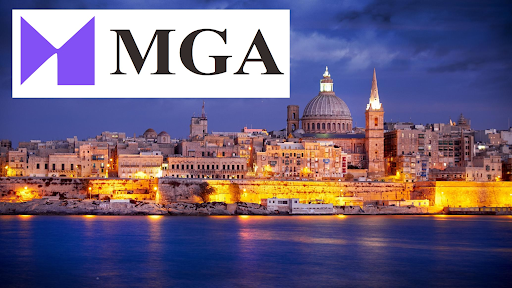
Malta was the first EU country to legislate for the online gambling market back in 2004. The MGA was established three years earlier — making it one of the industry’s first regulators. Today, over 500 iGaming operators are registered in Malta, and more than 10% of all online casinos worldwide operate under the MGA’s supervision.
Market analysts believe that the costs of obtaining a Maltese licence are fully justified given the benefits operators receive:
- Increased trust in the company among potential customers and partners — the regulator’s reputation is extremely high, and strict standards guarantee the fairness and security of gaming.
- Access to financially attractive European markets and expansion of the customer base — the licence is recognised in many EU countries.
- Transparency and stability of operating rules and requirements — predictability and the absence of frequent changes to legislation and regulations facilitate the systematic development of the business.
- A favourable tax policy compared to many competing jurisdictions, plus incentives available to certain categories of companies.
- The option to use a white-label business model — purchasing a ready-made, comprehensive solution certified by the MGA from one of the licensed online gaming software providers and operating it under your own brand. This allows you to speed up the project launch process and reduce start-up costs.
Furthermore, Malta takes a flexible approach to modern trends and responds sensitively to market needs — for example, it was one of the first jurisdictions to regulate the use of cryptocurrencies and blockchain technology in the gambling sector.
Categories and types of MGA licences

Under the provisions of the Gaming Act, adopted in 2018, there are two categories of licences in Malta:
- B2B — Critical Gaming Supply licences. Allows the provision of services and software to legal entities.
- B2C — Gaming Service licences. Grants operators the right to organise gambling activities and provide services directly to players.
The licence is valid for 10 years. Licences are available for both land-based and online operations. It is important to note that a licence to organise online gambling can be obtained by companies that use a server located in Malta.
The regulator does not publish a list of permitted/prohibited jurisdictions, but one of the MGA’s key requirements for operators is compliance with the legislation of the countries in which they operate. Operators in the B2C segment are required to ensure that games comply with the law and to clearly state in their terms and conditions that players are responsible for verifying the legality of their participation in gambling activities. B2B licence holders are entitled to provide services to companies that have obtained licences from the authorities of the EU and the EEA or in other countries with a regulated gambling market.
Licences are divided into four types depending on the gambling activities the holder is permitted to offer. Information on all types of Maltese licences and the amount of the annual licence fee is presented in the table.
| Licence type | For which gambling activities | Annual licence fee |
| Type 1 | Online casino games and lotteries, such as slots, roulette, blackjack, baccarat and other table games where the outcome is determined randomly | €25,000 |
| Type 2 | Fixed-odds betting on the outcome of events or competitions set by the operator — suitable for bookmaking activities | €25,000 |
| Type 3 | Games with no risk to the operator, in which participants play against each other — for example, online poker, as well as betting exchanges and certain types of lotteries | €25,000 |
| Type 4 | Controlled skill games — luck alone is not enough to win, as certain skills are required, such as in fantasy sports and certain multiplayer online games | €10,000 |
Steps for obtaining an MGA licence

Depending on the type of licence, a company applying for one must have a minimum share capital of between €40,000 and €100,000. If the applicant wishes to obtain several types of licence, the amount rises to €240,000. Only once you have ensured that your company meets these requirements can you proceed.
First, you must pay a non-refundable registration fee of €5,000 for each type of licence and submit your application along with the required documentation. Regardless of the type of licence, the process takes between 12 and 18 weeks from the date of application to the final decision. If the application is approved, the operator is thoroughly checked for compliance with the regulator’s requirements during the first year of operation. Subsequently, the MGA regularly audits companies operating under its supervision. For example, in 2021, documentary and on-site inspections covered almost two-thirds of all operators holding a Maltese licence.
But let’s go back to the start of the process. After submitting an application, the applicant can expect:
- Compliance check — the regulator’s staff carefully examine the company’s history, the backgrounds of its beneficial owners and directors, analyse their integrity and competence, and assess the applicant’s financial standing.
- Assessment of the business plan and technical documentation, including the games catalogue, and the terms and conditions of service provision.
- Review of the gaming system by an independent auditor — the user-friendliness of the online platform is checked from the customers’ perspective, including registration and login, account management, financial transactions, etc.
As already noted, to simplify the process, you can turn to an experienced iGaming software provider. Purchasing a casino platform, game aggregator and jackpot system developed in accordance with MGA requirements will help save time and money, enabling the project to be launched much more quickly.
Taxation of the gambling business in Malta
The registration fee and annual licence fee are not the only costs an operator under MGA supervision faces. Taxes must also be paid, which vary depending on the category and type of licence.
The table below shows the tax rates for B2C licence holders based on the operator’s total annual revenue.
| Licence Type | Compliance Contribution for the Financial Year | Rate |
| Type 1 | For every euro of the first €3,000,000 | 1.25% |
| For every euro of the next €4,500,000 | 1.00% | |
| For every euro of the next €5,000,000 | 0.85% | |
| For every euro of the next €7,500,000 | 0.70% | |
| For every euro of the next €10,000,000 | 0.55% | |
| For every euro of the remainder | 0.40% | |
| Type 2 | For every euro of the first €3,000,000 | 4.00% |
| For every euro of the next €4,500,000 | 3.00% | |
| For every euro of the next €5,000,000 | 2.00% | |
| For every euro of the next €7,500,000 | 1.00% | |
| For every euro of the next €10,000,000 | 0.80% | |
| For every euro of the next €10,000,000 | 0.60% | |
| For every euro of the remainder | 0.40% | |
| Type 3 | For every euro of the first €2,000,000 | 4.00% |
| For every euro of the next €3,000,000 | 3.00% | |
| For every euro of the next €5,000,000 | 2.00% | |
| For every euro of the next €5,000,000 | 1.00% | |
| For every euro of the next €5,000,000 | 0.80% | |
| For every euro of the next €10,000,000 | 0.60% | |
| For every euro of the remainder | 0.40% | |
| Type 4 | For every euro of the first €2,000,000 | 0.50% |
| For every euro of the next €3,000,000 | 0.75% | |
| For every euro of the next €5,000,000 | 1.00% | |
| For every euro of the next €5,000,000 | 1.25% | |
| For every euro of the next €5,000,000 | 1.50% | |
| For every euro of the next €10,000,000 | 1.75% | |
| For every euro of the remainder | 2.00% |
The following table shows the annual fees for B2B licence holders.
| Licence Type | Licence Fees on Annual Revenue | Fee |
| Type 1 | Where annual revenue does not exceed €5,000,000 | €25,000 |
| Where annual revenue exceeds €5,000,000 but does not exceed €10,000,000 | €30,000 | |
| Where annual revenue exceeds €10,000,000 | €35,000 | |
| Type 2 | Annual revenue does not exceed €1,000,000 | €3,000 |
| Annual revenue in excess of €10,000,000 | €5,000 |
A separate 5% tax is also levied on income from gambling club customers who are resident in the country.
Overall, tax rates in Malta are quite competitive compared to many other jurisdictions, and tax relief is also available. Therefore, a local licence appears attractive even despite the fairly strict requirements of the regulator—the MGA. However, it is worth bearing in mind that when operating in certain countries, such as those in the European Union, an additional tax burden will apply. This is due to the specific features of the fiscal and gambling legislation in such countries, where special requirements are imposed on operators.
MGA licence: when customer trust is assured
The gambling industry in Malta is developing rapidly: according to forecasts, the market size will reach $100 billion by the end of 2026. Malta is a pioneer in the regulation of the online gambling industry. Today, the MGA licence is considered one of the most reliable and authoritative in the world — it is no coincidence that it is recognised even in European Union countries known for their conservatism in the field of iGaming regulation. Strict requirements ensure the protection of both players’ and operators’ rights in equal measure, which boosts customer confidence and strengthens the reputation of the company holding the licence. Favourable taxation, ease of doing business, transparency of rules and conditions, and political stability — it is hard to find a more attractive jurisdiction.
Finally, it is worth noting that in a number of countries it is still not possible to operate under a Maltese licence — primarily those states where gambling is prohibited by law. The same applies to jurisdictions blacklisted by the FATF (the organisation that combats money laundering). Finally, in some countries, only a licence from the local regulator is recognised.